Introduction –
Keep your progress quiet: the secret power of silent self-improvement
Sharing your accomplishments and milestones online is now a routine for many of us due to the digital age in which we live. It ranges from starting a new fitness regime to reading more books, launching an enterprise, picking up a new skill, or saving enough to get financially independent, all these are commonly shared on social media the very moment a person decides they would do it.
Although announcing victories now and then could certainly be motivational for the people around you, revealing and declaring your intentions and accomplishments too soon can in fact hinder and hold down your development.
Here is an older proverb that has not out of date:
“Work in silence, let your success speak.”
This short sentence has, however, gained more relevance in these times. Genuine change takes place quietly, discreetly behind closed doors, and apart from the public eye’s approval.
This post outlines why you ought not constantly be disclosing what changes you are making, what is the psychology of getting progress without being noticed, what kind of tools you can use to not let other people distract you, and what part secrecy can become of you as an ultimate asset.
Why People Feel the Need to Share Their Progress
We are naturally wired as human beings to get a certain kind of approval, and we want to be connected too. Often, setting up a target and making others know it is mainly because you desire the best things which they can do. These might include:
- Hope for getting support;
- To feel one is up-beatifull;
- To keep track of oneself and be responsible;
- To acknowledge achievement;
- To give the people around one’s example.
But, even so, the above-mentioned advantages are only accompanied by negative sides which, in fact, may go beyond the advantages and people often become aware of these only after being harmed.
The Science of Why it Is Not Good to Share Your Goal in Public
 Download Image
Psychological scientists claim that announcing your goals publicly may lead to a misapprehension of what you have done.
As people commend you on such a decision, your brain actually triggers a rewarding sensation, a minute before the job has actually gone.
In reality you gain your satisfaction through persistent effort, yet from the outside you gain it.
It means less incentive to go on will be in your mind.
Besides, your subconscious will think that you have achieved a huge amount just because other people know about your intentions.
Quiet Progress Helps in Building Greater Strength of Self-Control
 Download Image
Internal sources of motivation lead to stronger perseverance and self-discipline whereas others’ views play only a minor role.
Hiding from others:
- One reason you are getting to work is to better yourself.
- We stay consistent even without a cheer of applause.
- You are developing the kind of habits that stick to the person forever!
- Gone are the days of hiding the work of those who have been successful for decades before any publicity.
- Fatigue and announcements can hardly match the strength of results.
Public Pressure Can Become a Burden
 Download Image
Imagine announcing your plans to:
- Start a business
- Go on a diet
- Write a book
- Learn coding
- Pretend for an exam
to about three hundred people at once.
Every time you meet a dead end is a story in the public sphere.
Gradually, you will switch from the mode of getting better in something to the mode of thinking about people, i.e., their judgments towards you.
Failure phobia gets magnified.
Making people talk about it can lead to mental health disturbances and quitting the endeavor altogether.
By keeping your goals confidential you gain freedom to make mistakes, learn, alter, and evolve without having to face others’ judgment.
Real Growth is Invisible
Each and every champion, tycoon, creative, and expert spends an innumerable amount of time on honing skills that go unnoticed.
Most people are only able to see:
- Cutting the graduation ribbon
- Startup success
- Major sports award
- The cover of book
- Promoted at the job
But hardly anyone sees:
- Waking up early when still tired
- Failing to get accepted
- Committing errors that need correction
- Fumbling to find their feet
- Practicing late at night and into the morning
Success that we see is built on silent work.
Public Pressure as an Enemy:
Suppose at a gathering of 300 people, you announce a series of plans:
- start a business
- lose weight
- write a book
- sentence: learn coding
- break an exam
all in one day.
As soon as you stumble, your whole neighborhood gets your business.
Your mind is gradually transformed from that of a learner to that of a concern for others. You become obsessed with their opinion.
One’s fear of failure is another negative thing that may result.
Trying to stimulate people to discuss about a topic that is very sensitive at a psychological level is going to leave people with an impression, and they may not only drop the project but also give it up.
Keeping the targets to oneself gives you the liberty to have a bad day, make some mistakes, change your mind while learning, and even go through a totally different set of experiences without worrying about what others will see or say about them.
The kind of growth that one makes in real life is totally invisible to the world
 Download Image
Even the most successful people in their professions are usually the ones who behind their public personas, are spending years refining their skills to master a very unique and obscure technique, which no one else has done before.
About such people, the world in general knows nothing more than:
- the opening of a graduation ceremony with ribbons;
- the success of a business;
- a trophy for a major sports player;
- the book cover;
- the job promotion;
At the same time, it is very rarely the case that people see the real hard work behind what others see: for instance,
- dying to sleep early after a long day;
- being rejected;
- being wrong;
- figuring out the right way to proceed;
- Training after night has fallen and continuing through the early morning;
The success we can see at first glance is the outcome of silent devotion.
Social Media Creates an Illusion
Social media encourages constant updates.
People post:
Day one at the gym
Every workout
Every book
Every meeting
Every achievement
But improvement isn’t performance.
Sometimes it becomes less of doing the work and more of documenting everything.
An audience is not a prerequisite for real growth.
Privacy Protects Your Energy
Mental energy is spent in every conversation about your goals.
When multiple people ask:
“How’s your business going?”
“Did you lose weight?”
“Are you still studying?”
“How’s your new project?”
Instead of progress, you learn to articulate the progress you make.
The energy that you save not announcing your goals is better spent on matters of importance.
Not everyone wants you to thrive.
Accepting this can be difficult.
Most people agree with you.
Some do not.
Others can unwittingly put you off by:
* Uncertainty
* Critique
* Envy
* Adverse feedback
* Uninvited counsel
Maintaining secret key objectives helps one to avoid needless negativity.
You determine who has access to your trip.
Your Results Get More Impact
There is something always amazing about shocking people.
Rather than saying:
I’m working on a book.
Consider saying:
“My book is now on sale.”
Rather than remarking:
“I’m launching a company.”
Picture saying:
“We just started a second office.”
Outcomes provide trustworthiness.
Promises almost never turn out.
Silence Creates Self-assurance
Talking does not create confidence.
It is from activity.
Every finished job helps you to be more confident in yourself.
Your confidence stems from experience, so eventually you start not needing authorization.
That assurance is not easily shattered.
Success is cumulative one silent day at a time.
Most changes lack interest.
Daily routines consist of:
* Going Through 20 Pages
* Working out for 45 minutes
Saving cash
* Exercising a talent
Writing constantly
None of these events strike me as thrilling.
Still, taken together they change lives.
Every time, consistency trumps excitement.
When ought you show off your progress?
This does not imply that you ought to share.
Talking about your path has good health benefits.
Tell me when:
* You really wish to assist other people.
* You have produced significant results.
Someone can pick knowledge from your background.
* You are commemorating a significant event.
* Trusted mentors are leading you.
Stay clear from sharing only to get approval.
Create a circle of trusted individuals.
You need not keep total secrecy.
Rather, select a little support structure.
These could consist in:
* Your companion
* Two parents
Close friends
* Mentor
* Coach
* Accountability companion
These individuals inspire your development without causing undue public scrutiny.
The Distinction Between Showing Off and Confidence
Confidence says:
“I am aware of my abilities.”
Flaunting claims:
I want everybody else to realize.
Real self-assurance is subtle.
Arrogance speaks loudly.
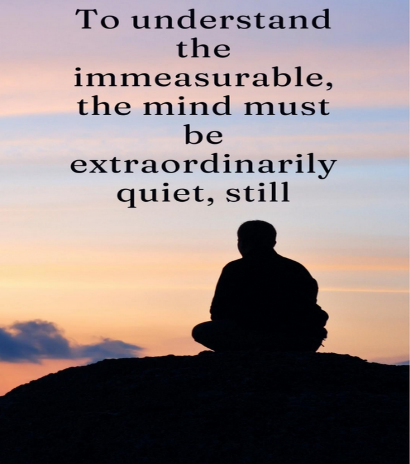
The strongest people seldom have to continuously prove themselves.
 Download Image
Instances of Quiet Development
People gently get better by:
* Learning a different language
* Paying debt off
* Developing good routines
* Regular reading
* Growing in spirituality
* Developing leadership qualities
* Changing Relationships
* Beginning investments
* Developing a business
* Perfecting a career
Years later, individuals just start to notice.
The change seems sudden.
In fact, it took hundreds of quiet days to construct.
Silent Growth: Long-Term Advantages
Deciding to keep private throughout your trip has several long-term advantages:
* Increased self-control
* Improved concentration
Less anxious
Stronger self-assurance
* Greater output
* Less comparison
Improved homogeneity
* Improved relationships
* Greater significance
* Improved resilience
These traits set the stage for lifetime prosperity.
Conclusion
Last Thoughts You need not share every chapter of your life.
Some of your best changes call for secrecy.
Work without noise.
Always be learning.
Falsely
Every day get better.
Then let your deeds speak the story.
Keep in mind, success is determined by how many individuals know your intentions rather than by numbers. It is evaluated by how precisely you carry them.
The more time you have to really improve, the less you discuss becoming better.
People will eventually recall your successes, not your announcements.
Frequently Asked Questions (FAQs)
1. Why ought I not share my personal objectives with others?
Sharing objectives too soon might lower drive, add unneeded pressure, and have you rely on outside validation instead of continuous work.
2. Should I always feel wrong sharing my work?
Not. When you’re motivating others, looking for professional advise, or celebrating significant accomplishments after significant advancement, sharing can be beneficial.
3. Does silent self-improvement actually help?
Indeed. Many prosperous individuals concentrate on organized, solitary work before they show off their accomplishments. Quiet regularity usually produces better long-term results.
4. Can sharing goals lower inspiration?
Psychological studies show that praising intentions alone can occasionally lead to a fake sense of success, therefore discouraging one from remaining driven.
5. How should I remain responsible outside of online presence?
Keep an eye on your development in secret using a journal, habit tracker, reliable mentor, coach, or accountability partner.
6. Should I maintain employment goals secret?
Not constantly. Sharing them with mentors, managers, or coworkers who can truly assist is prudent, thereforeavoiding needless public announcements.
7. Does privacy share secrecy’s traits?
Not at all. Privacy is deciding who should know your objectives. Intentionally keeping knowledge hidden is secrecy.Good seclusion preserves your attention and energy.
8. Silent growth offers most advantages.
Improved discipline, more self-assurance, less stress, better focus, more production, and more resilience are among the advantages.
9. How do I fight the need to share every success?
Before you post, consider if you are just looking for validation or truly trying to assist others. Should it be the latter, think about keeping the occasion personal.
10. For long-term self-improvement, what is the best attitude?
Concentrate on everyday routines, rely on the process, have patience with mistakes, and let your results show your development instead of your words.